Can Wasanbon Save Communities?
Japan is aging faster than almost any country in the world.
But the first places to feel the impact are not big city like Tokyo or Osaka.
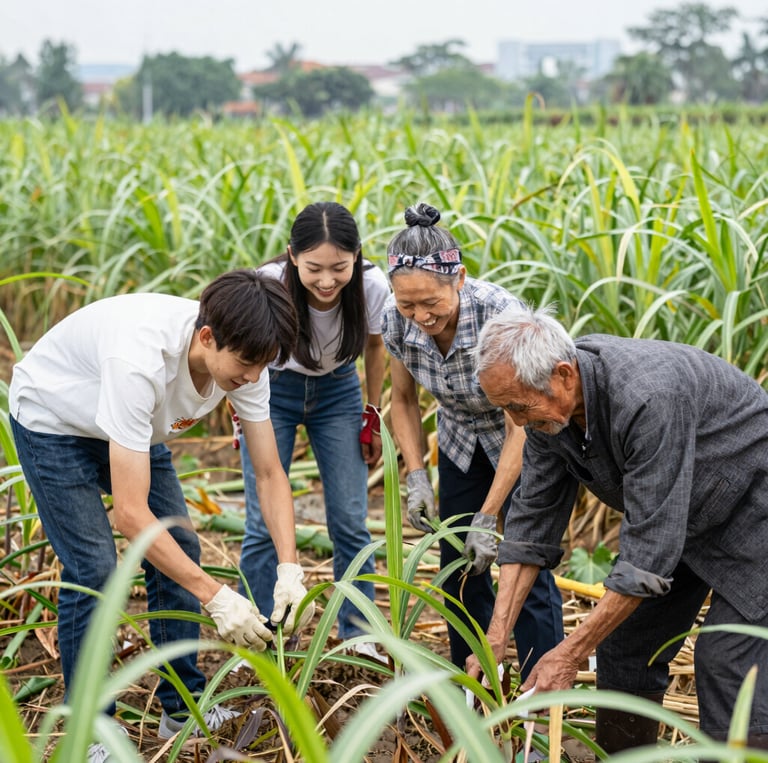
They are the remote islands and rural communities of Okinawa and Kagoshima — places where sugarcane farming has supported local economies for generations.
Across these islands, farmers are aging, younger generations are leaving, and abandoned farmland continues to increase.
As communities shrink, the consequences extend far beyond agriculture itself.
Local industries weaken.
Regional infrastructure declines.
Traditional knowledge disappears.
And entire communities risk fading away.
Yet these same islands still hold something extraordinary.
A deeply rooted sugarcane culture.
Traditional craftsmanship.
And the possibility to create products the rest of the world cannot replicate.
At YOHAKU, we believe the future of Japanese sugarcane should not compete on volume.
It should compete on culture.
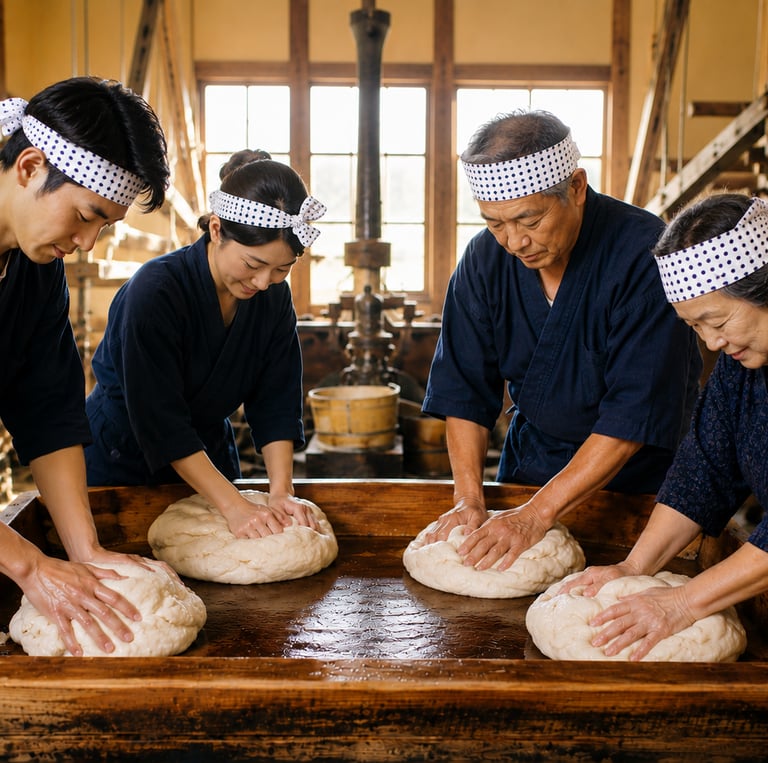
For generations, Japan has produced traditional sugars through refined craftsmanship and patience. Among them, Wasanbon stands apart.
Delicate, complex, and deeply tied to Japanese culture, Wasanbon is not simply a sweetener. It represents artisanal skill passed down through generations.
Today, many islands in Okinawa and Kagoshima primarily produce brown sugar as a commodity product. But we believe there is an opportunity to create something greater.
By introducing premium Wasanbon sugar craftsmanship and elevating the cultural value of sugarcane, these regions could transform sugar from a low-margin agricultural product into a high-value cultural industry.
A stronger premium industry could:
create higher income opportunities
encourage younger generations to remain on the islands
attract tourism and new talent
restore pride in regional identity and craftsmanship
We believe premium products create more than revenue.
They create "meaning".
By doing so, we believe these communities can regain pride in their regional identity and craftsmanship.
And perhaps inspire people beyond the islands — not only to learn, but to admire a way of life that should never disappear.
From Cane to Clean Energy
We also believe sugarcane has future potential beyond food itself.
During the production of traditional sugar, by-products and biomass materials are generated that may one day contribute to sustainable industries such as SAF (Sustainable Aviation Fuel).
Compared to conventional fossil fuels, SAF can reduce lifecycle CO₂ emissions by approximately 60–80%, and is increasingly viewed as one of the key solutions for decarbonizing aviation.
As the world moves toward carbon neutrality by 2050, demand for sustainable biomass resources is expected to grow significantly.
This creates the possibility for sugarcane communities to participate not only in preserving tradition, but also in shaping the future of sustainable energy.


Connecting Tradition and Future
In Japanese, YOHAKU means “empty space” — but not emptiness.
It is the intentional space that gives meaning to what surrounds it.
The silence between sounds.
The pause between thoughts.
The moment to breathe.
In traditional Japanese aesthetics, beauty is often found not in excess, but in balance, restraint, and space.
YOHAKU was created from this philosophy.
At YOHAKU, we do not see Matcha and Wasanbon simply as products.
We see them as a way to reconnect culture, craftsmanship, sustainability, and community.
A way to preserve what should never disappear.
And perhaps, a way for sweetness to help shape the future of Japan.


Win Aoyama Bld, 2-2-15 Minami-Aoyama, Minato City, Tokyo 107-0062, Japan
Contact
© 2024. All rights reserved.